A GUIDE TO THE UNTHINKABLE: INCLUDING PEOPLE IN YOUR LANDSCAPE PHOTOGRAPHY
Picture this: you’ve spent weeks planning a sunset shot in a beautiful valley surrounded by impressive peaks and dotted with blooming wildflowers. A small reflecting pond sits in the foreground, bouncing the light and adding a surreal mirror image to the scene. You’ve spent hundreds of dollars on airfare, car rental, and lodging. Finally you’ve arrived at the spot two hours before sunset, ample time to find the right composition, set up the tripod, and dial in the camera settings. A few other photographers are nearby too, but there is plenty of space for all and an unspoken understanding that everyone is here for the same reason. Even among introverted landscape photographers, there is chat and camaraderie (except for that one salty old guy... there always seems to be one!) The golden hour is near, the sun sinking lower and softening by the minute. And then it appears… at first a distant speck on the horizon, then rapidly gaining ground, now audible and even larger than expected. You hope it will pass by, but it slows and then turns toward you, crackling over loose gravel. With a piercing pneumatic clap, a full size tour bus announces its arrival, belching out a steady stream of tourists now engulfing the landscape like rising floodwaters. Your image is about to be ruined by selfies, family photos, and influencers. The bolder ones might even interrupt your shoot and ask you to take their picture.
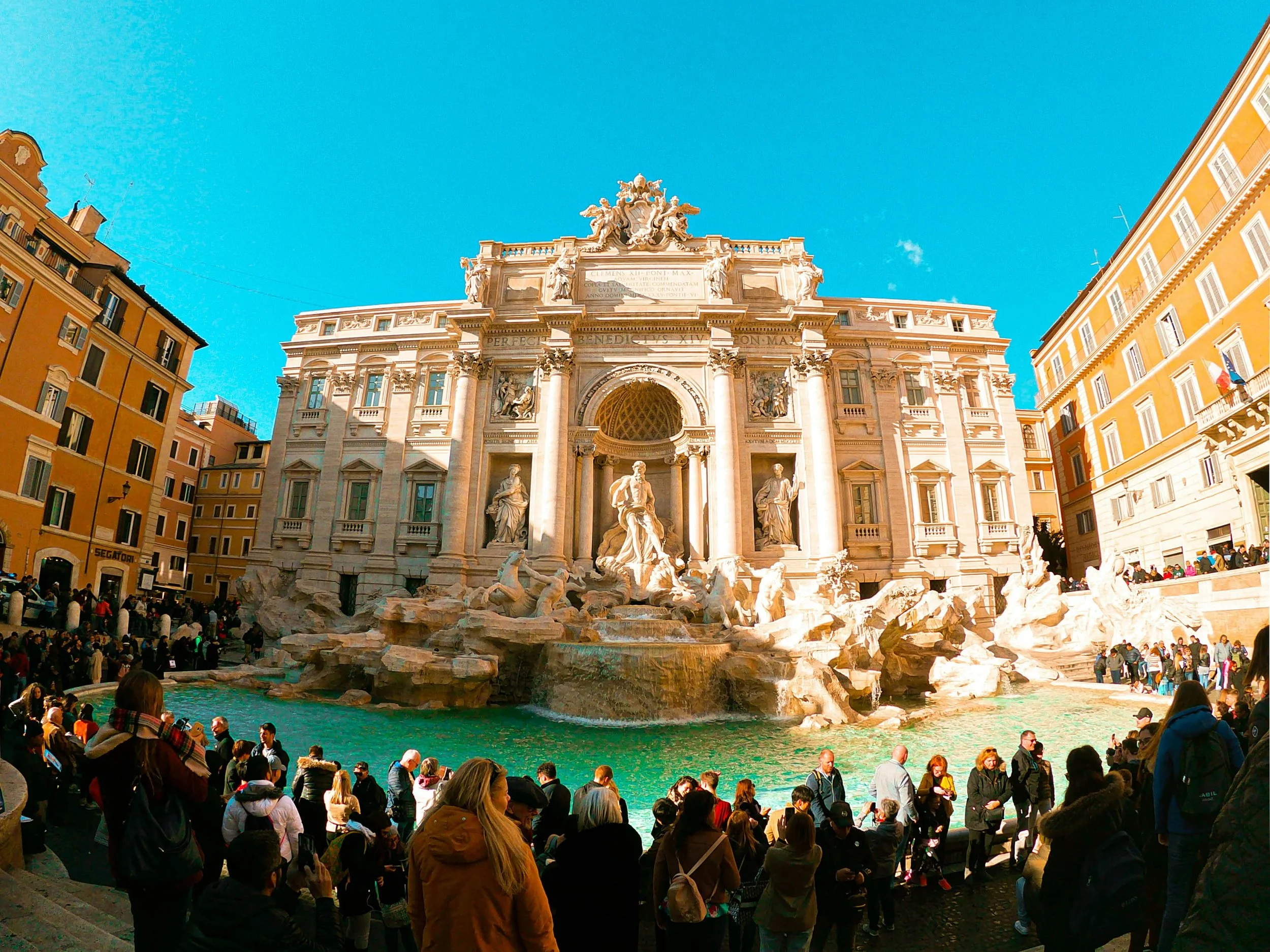
Rome’s Trevi Fountain averages 30,000 daily visitors (Photo: Martino Grua)
Over the years I’ve experienced this scenario many times and have used various methods to remove people from my photos. Sometimes asking people politely if they could briefly step out of the way is the best approach. Other times there are simply too many people for this to be feasible, especially in popular locations. Photoshop provides numerous tools including cloning, statistics, and more recently generative fill (effectively an AI-based eraser) to strip out unwanted people from the image.
Some images, however, are actually enhanced by including a person. I know this his is blasphemy to the purists — landscape photographers are almost atavistically opposed to any people in their shots. But hear me out: people are instantly recognizable elements in a photograph, and that provides context and scale to the viewer. This is especially effective in demonstrating wide landscapes and tall features. I’ve even used people in my underwater photography to emphasize the relative size of a subject, be it an animal or a shipwreck. The key to including a person is that their presence adds to and does not distract from the story. Let’s have a look at a few examples where people genuinely improve the shot:
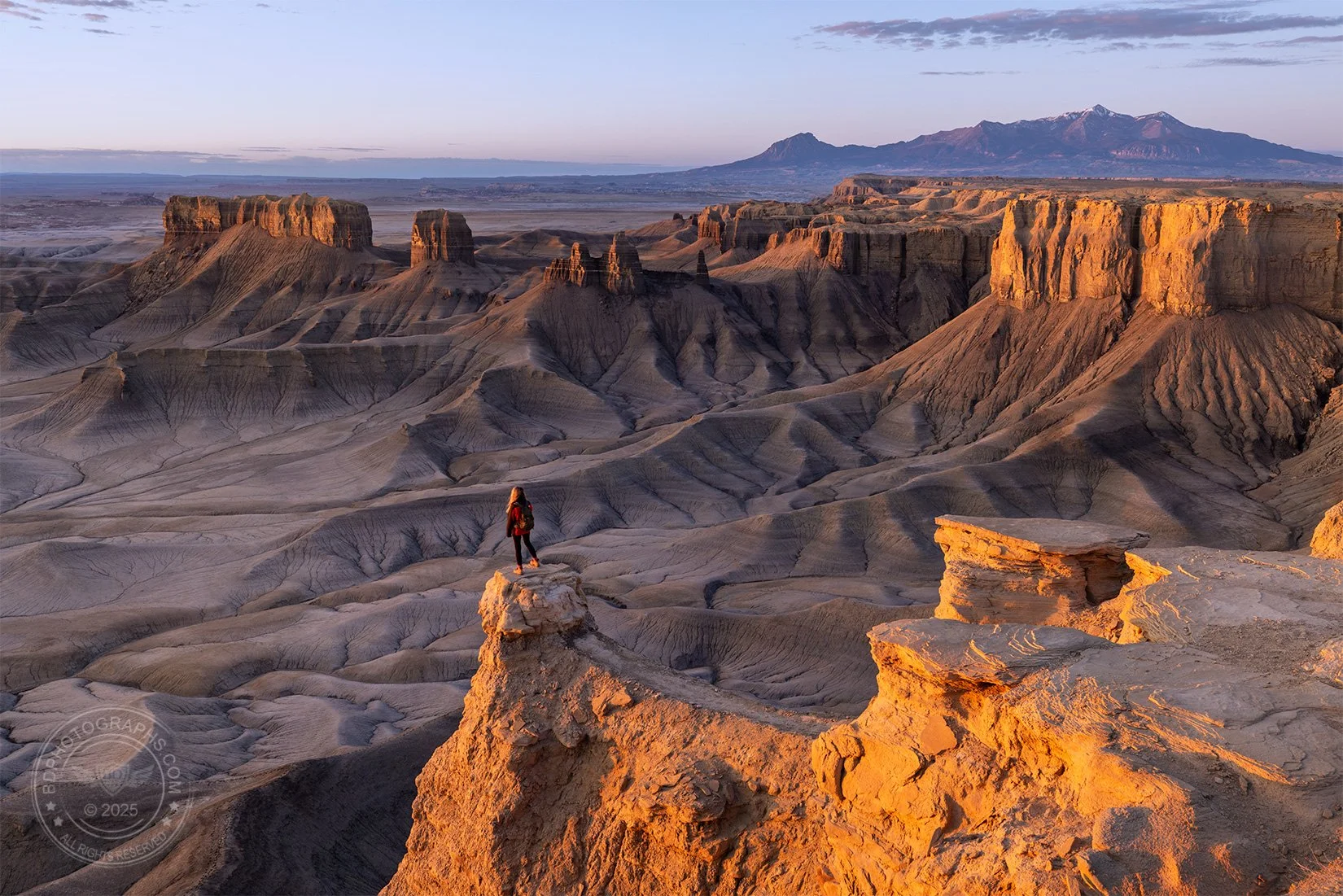
The vast desert landscapes in Utah stretch for miles, and the abstract formations can be difficult to comprehend without a reference point. In this image, a young woman stands on a steep pinnacle overlooking a deep canyon. I would never ask anyone to take on something this dangerous, but it happened to be something she wanted to do. A fall from this point would certainly be fatal with nearly a 1400-foot drop into solid rock. Unprompted, the woman asked me and two nearby photographers if we were ok with her stepping into the shot. She apparently wanted to take in the view and told us she was not afraid of heights. Truthfully we had no right to refuse; it’s public land and we had no more claim to it than anyone else. She was considerate and savvy – even volunteering to borrow a red jacket from someone to “pop” a bit more in the photo. After about two nail-biting minutes (for us, not her, apparently), she returned safely from the ledge to more stable ground, leaving three photographers with greatly improved landscape images.
Our eyes play tricks on us underwater, and in the featureless open ocean, there is no way to understand scale. This is illustrated brilliantly in Disney’s “Finding Nemo” in the scene where a distant shadow resembles a small fish (“hey little fella”) but later emerges as a giant baleen whale.
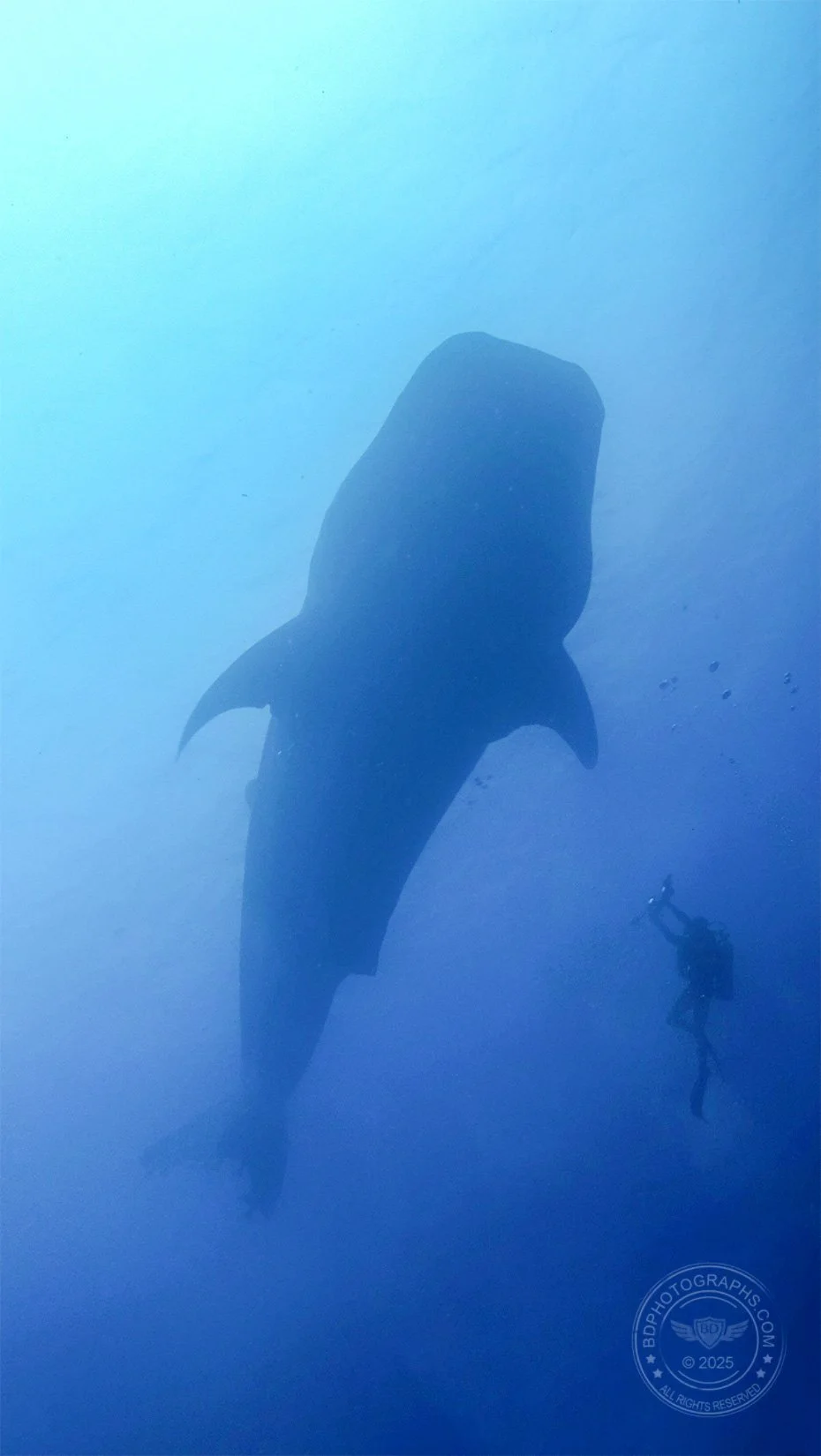
The author meets the world’s largest fish (Photo: Zero Lee)
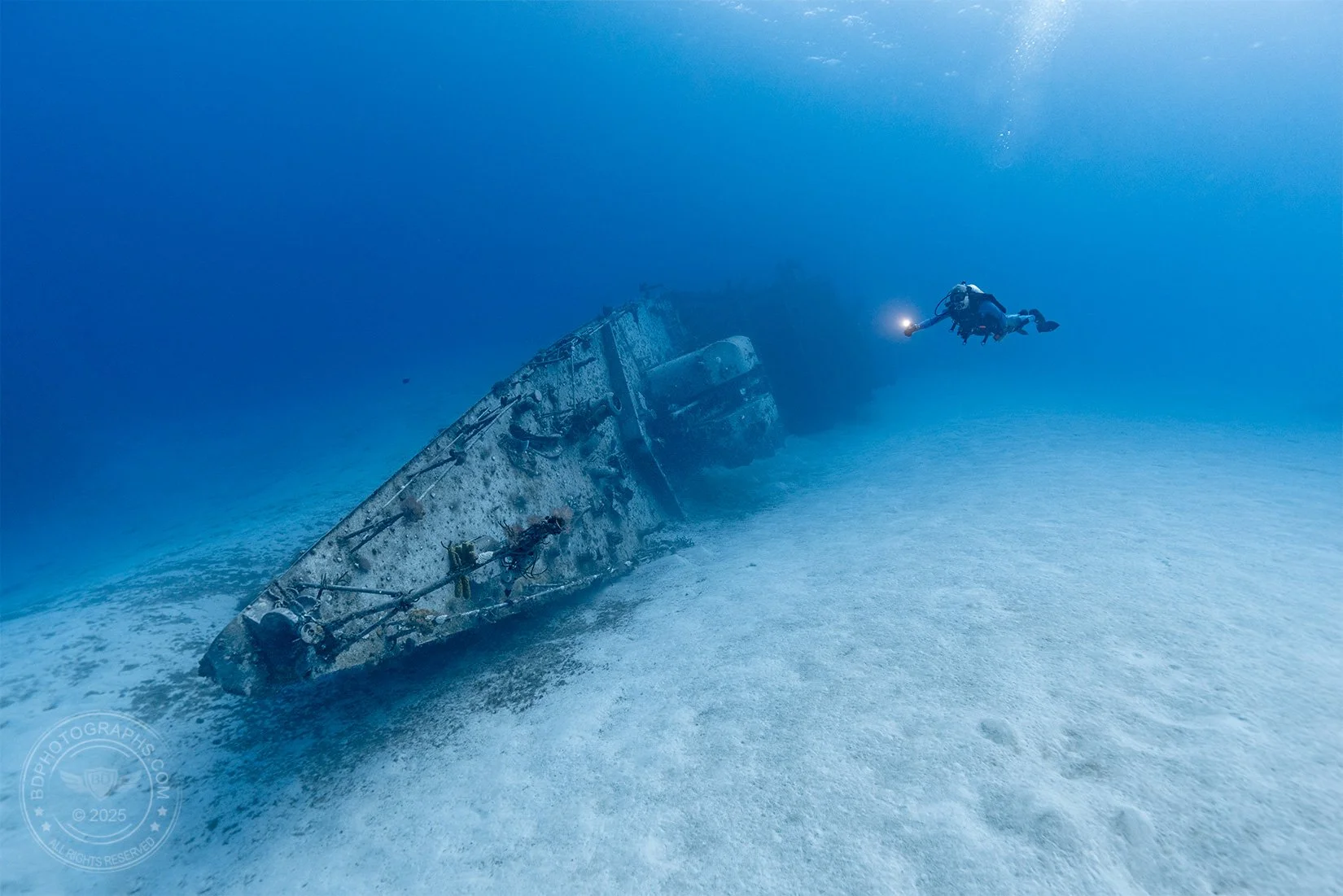
Using a diver in your image instantly provides a subconscious tape measure to the viewer as you’ll observe in these two examples. The shipwreck image was planned: my dive buddy and I discussed the photoshoot prior to entering the water. He swam out near the ship and I directed him into position. Although the photo was captured using only natural light, the flashlight is a nice gimmick and adds a sense of exploration to the scene. The second image was a happy accident: I am actually the diver who appears unknowingly in the shot alongside an adult whale shark. My friend captured this moment in the Galapagos Islands which perfectly demonstrates the massive size of the ocean’s largest fish.
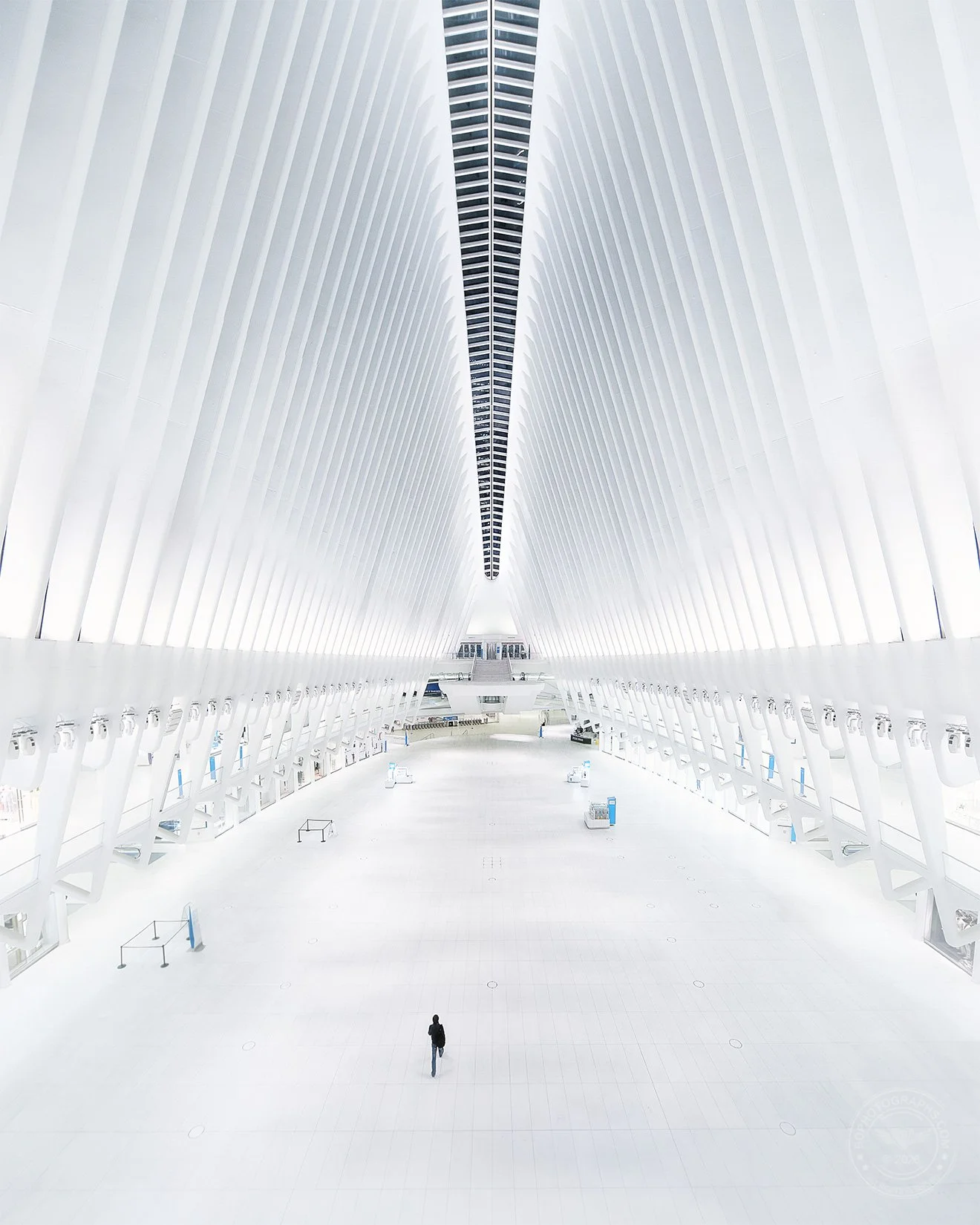
In New York City it is almost impossible to photograph locations without people, and lots of them. This shot of the Oculus was photographed late at night in the days before COVID shut down much of the city. Photographers who have been to this location know even the widest lens struggles to fully encapture the cavernous structure; I achieved this with a stitched panorama of hand held shots using a tilt-shift lens. The single person is real and was unplanned. I have yet to see this location as empty as it was that night.
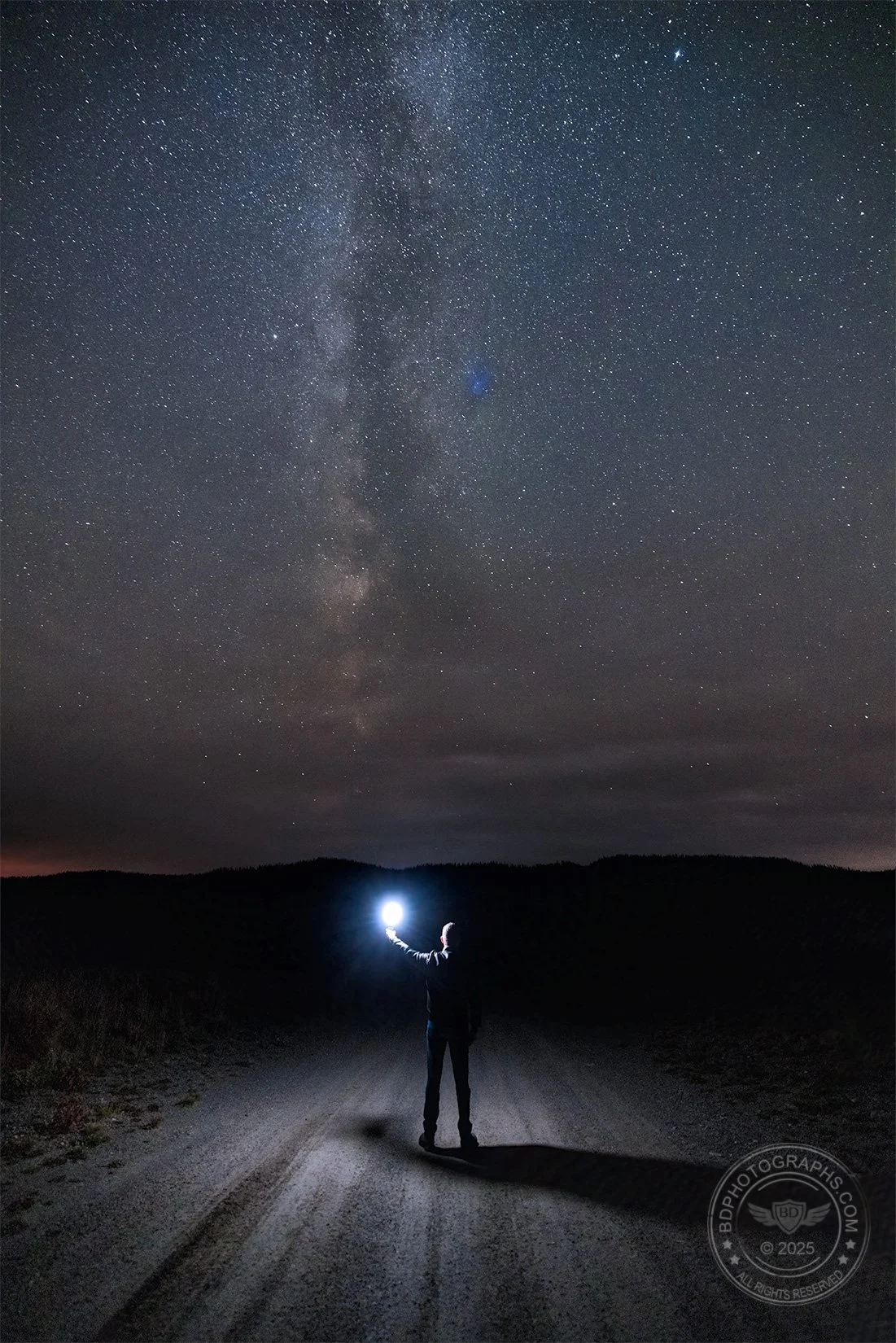
Sometimes including a person in an image is a last-ditch effort to salvage a shot. In this late season Milky Way photo, I planned a shot with a dirt road that aligned cleanly with the Milky Way in the dark Wyoming sky. Miles from anywhere, I had few foreground options so decided to step into the shot myself holding an off-camera flash. The addition of artificial light also helped to light the road and give the shot some depth. I especially like the tire tracks as leading lines: simple but effective. While not portfolio quality, this image turned out to be a fun, albeit cliche, nighttime shot.
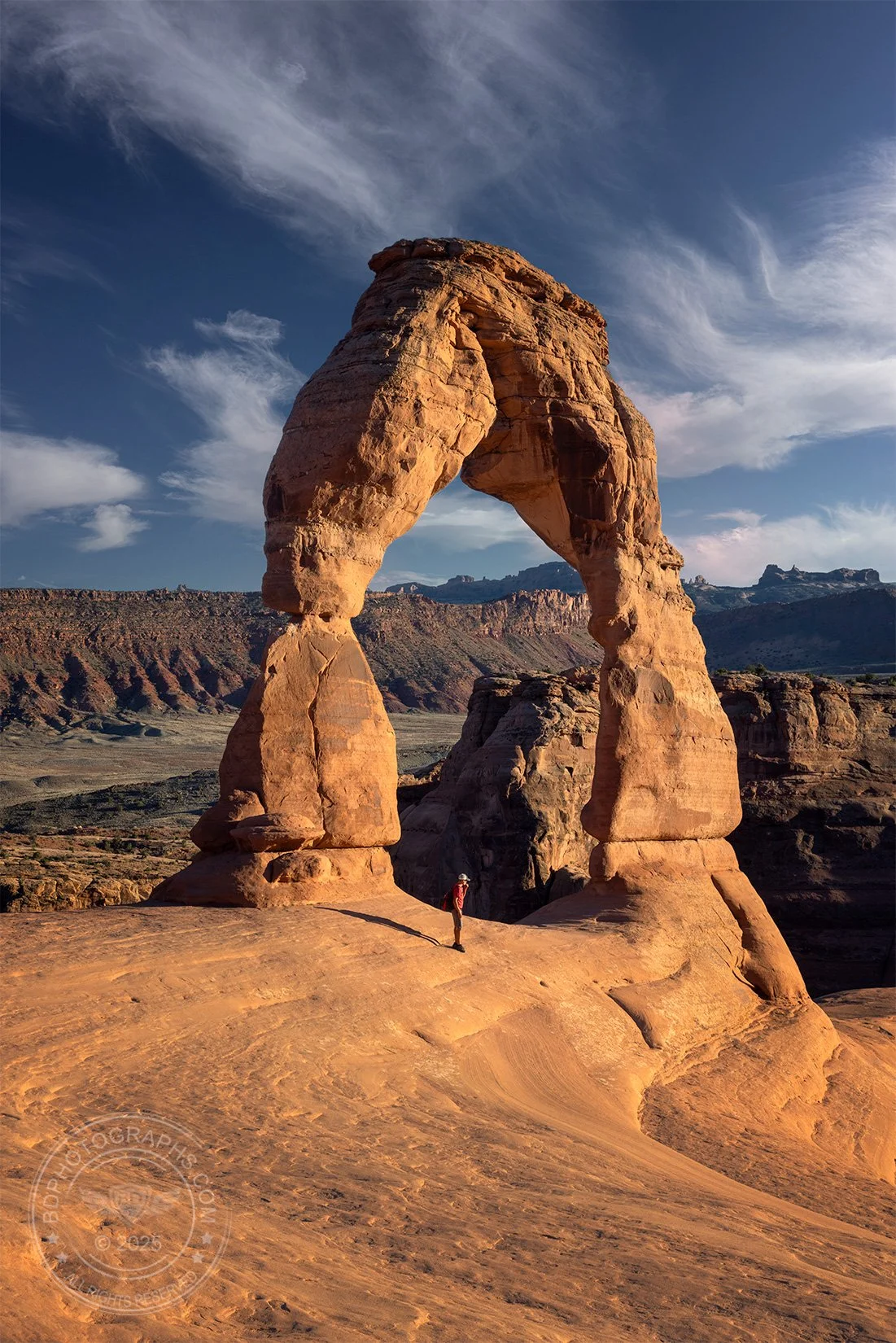
Arches National Park has been photographed countless times and I knew a sunset shot at Delicate Arch would not be groundbreaking, even with a spectacular sky. With mostly clear weather in the forecast, I expected an underwhelming sunset and instead opted for a golden hour shot of the park’s most famous “small” arch bathed in soft light – also not original, but more interesting to me than a dull sunset. Like some other famous landmarks, the height of Delicate Arch is difficult to discern without a frame of reference. When I saw the long shadow cast by a hiker who stepped into frame, I instantly fired off several shots. Not only was the light flattering, the image now clearly showed the height of the arch. Most viewers of this image react the same way: “I had no idea it was so tall”.
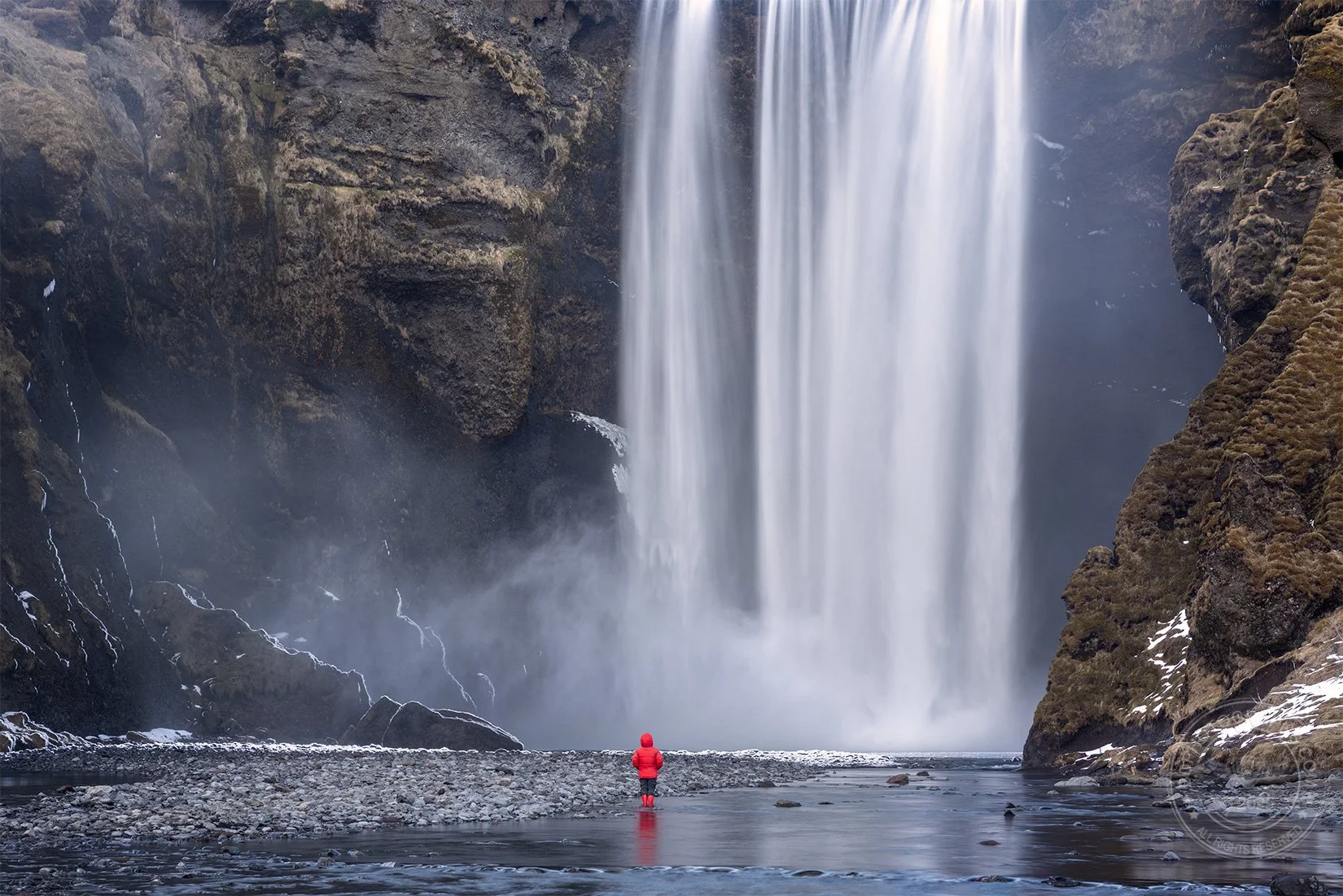
Like my photoshoot at Arches, another failed sunset inspired me to capture this image of Iceland’s famous Skógafoss. Clear skies over the falls did not bode well for a colorful scene, so I took a different approach: instead of forcing a wide and uncooperative sunset shot, I tightened the composition and zoomed in on the powerful waterfall. I intended to be my own subject and walk into the shot with a timed exposure, but to my surprise, a woman walked into my frame of view unannounced, unplanned, but very welcome for a few reasons: 1) the red parka provided a vivid contrast to the brown and gray earth-tones, 2) she happened to be small in stature, making the falls look even more impressive, and 3) she stood perfectly still, taking in the falls in a contemplative moment.
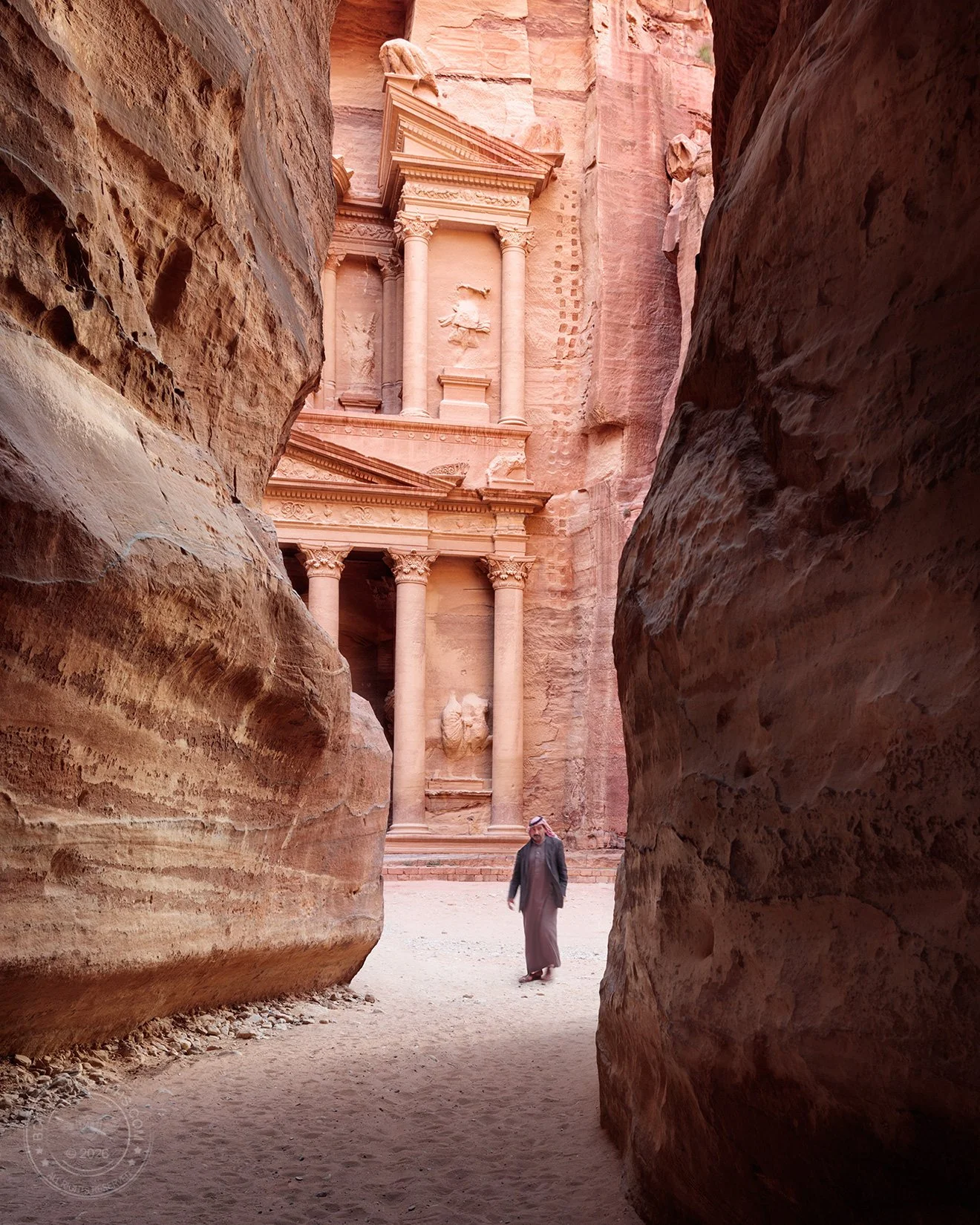
People can do more than provide a benchmark for scale — they can also give a sense of place. A person dressed according to local custom, or one engaging in a unique activity can profoundly affect the viewer’s understanding of an image. In this example, a Jordanian man emerges from behind a canyon wall in Petra. I was already a shooting the great reveal for a few moments when he stepped into frame. If I had known he was going to enter the shot, I would have bumped up my shutter speed and ISO to get him just a bit sharper. Nonetheless, the impact is obvious and his appearance significantly improves the photo.
Each of these examples should convince you that sometimes people in your photos can make scenes even more impressive. In some of the images a person entered the scene unplanned but fortuitously. In others, the person was included purposefully – even directed – to enhance the image. And for those times when we want to exclude a person, there’s always Photoshop.
Post script: Many photo competitions disqualify images that include people when they are submitted as landscape or wildlife entries. The travel category is usually more forgiving. If you shoot with the goal of entering a photo contest, keep this in mind.